TL;DR
- Escalator step cleaning improves appearance and helps support safer, more efficient operation long term.
- Dirt, grease and debris can reduce traction on the step surface and contribute to buildup in critical areas.
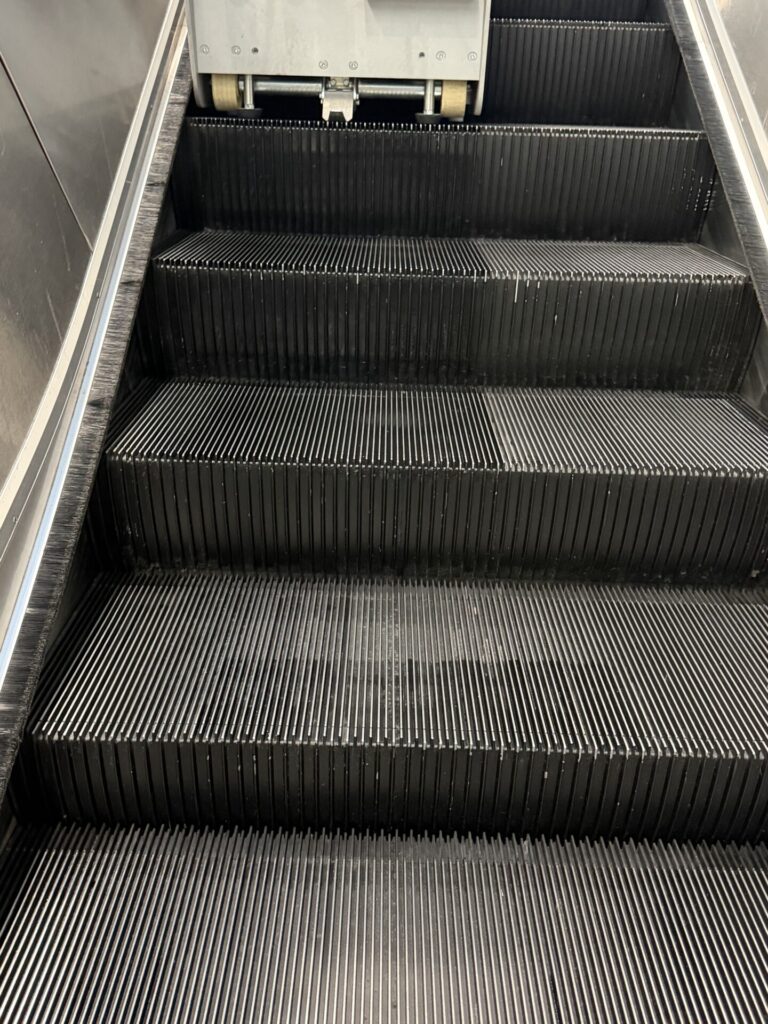
- Basic surface cleaning may not reach front risers, step treads or oily black tram lines beneath the brush guards.
- Regular cleaning works best as part of a broader preventative maintenance plan, not as a replacement for full escalator service.
Escalators are one of the most visible pieces of equipment in a commercial facility. When they look dirty, people notice right away. Regular step cleaning improves appearance, but it also helps facility teams stay ahead of buildup that can affect safety, cleanliness and long-term performance.
Why It’s Important to Clean Escalator Steps Regularly
Escalator steps pick up dirt fast, especially in high-traffic environments. Dust, moisture, oil, sand and everyday debris can settle on the tread surface and inside the step treads over time, affecting both how the escalator looks and how it performs.
Appearance and First Impressions
Clean steps make the facility look more polished. In retail centers, airports, hotels, office buildings, hospitals and other public-facing facilities, escalators are often part of the first impression visitors get when they enter the building. Dirty steps can make the equipment and the property feel neglected, even when the rest of the space is well maintained.
Safety
When grime, grease or other residue builds up on the surface, traction can drop, and slip risk can increase. Packed debris can also affect step treads and cleat definition, which can make the surface less effective over time. Buildup may also contribute to longer stopping distance or make it harder to spot conditions that need attention. Heavy debris buildup is often a sign that the escalator has not been serviced in a while and that other issues may be developing.
Maintenance Visibility
Regular cleaning supports preventive maintenance by helping teams spot signs of wear sooner and reducing the amount of debris that works its way deeper into the system. Heavy debris buildup can also be a sign that the escalator hasn’t been serviced in a while and that maintenance needs are going unaddressed. In high-traffic facilities, clean steps help reinforce that the equipment is being maintained properly, which can build confidence among customers and visitors.
What Conventional Cleaning Can Miss
Some cleaning methods improve surface appearance without reaching every area of the step. Routine or conventional cleaning usually focuses on the exposed step surface. It may involve wiping, mopping or other surface-level cleaning that removes loose dirt and improves appearance. But it can still leave behind buildup in front risers, step treads and the oily black tram lines beneath the brush guards. Professional escalator cleaning is designed to reach those harder-to-clean areas with specialized equipment and a deeper cleaning approach.
How Buildup Affects Escalator Performance
Dirt doesn’t stay neatly on the visible step surface. Over time, it can travel into other parts of the escalator, including the step chain system, pits, tracks, rollers and comb plate areas. Once debris reaches those areas, it can contribute to wear, misalignment, faults and avoidable shutdowns.
Abrasive particles can be especially hard on moving parts. Left alone, that buildup can lead to more maintenance calls, unplanned shutdowns and higher service costs. In busy facilities, it can create more disruption for visitors and make avoidable issues more expensive to address.
Once heavy grime is removed, technicians and building teams can more easily spot unusual wear, damaged step treads or cracks before they become larger problems.
How Often Should Escalator Steps Be Cleaned?
The right cleaning schedule depends on how much traffic your escalators handle.
As a general guide:
- High-traffic facilities, such as malls and airports, may need cleaning every three to six months.
- Medium-traffic properties may need cleaning every six to 12 months.
- Lower-traffic sites may only need it annually.
If your escalators are exposed to heavy daily use, outdoor debris, moisture or frequent spills, a more frequent schedule may make sense. A more frequent schedule can reduce the chance that buildup affects safety, appearance or equipment performance.
When It Makes Sense to Bring in a Professional
In-house cleaning teams can often handle everyday surface cleaning, but escalator cleaning may call for a more specialized process when buildup becomes harder to remove or starts collecting in difficult-to-reach areas. If your facility has heavy foot traffic, recurring grime along the step edges, visible buildup in the step treads or limited staff time for detailed cleaning, professional service may be the better fit.
A professional approach can also make sense when your team wants a deeper clean without disrupting broader maintenance planning. Step cleaning works best alongside your regular maintenance schedule, not as a substitute for it.
Support Long-Term Performance With Professional Escalator Step Cleaning
If your escalators are due for a deeper clean, Elevated Facility Services can help. We clean the areas routine surface cleaning often misses, helping your equipment look better and reducing the wear that can lead to larger maintenance issues.
If your team doesn’t have the time or resources to handle this in-house, Elevated Facility Services can build step cleaning into your broader maintenance plan.
Interested in scheduling escalator step cleaning for your facility? Reach out to our team today to learn more.